
Little Panda's Cat Game
BabyBusEducational
4.6216.00 Reviews
- Version
- 8.75.43.00
- Installs
- 10.00M
- Age Rating
- Everyone
Screenshots

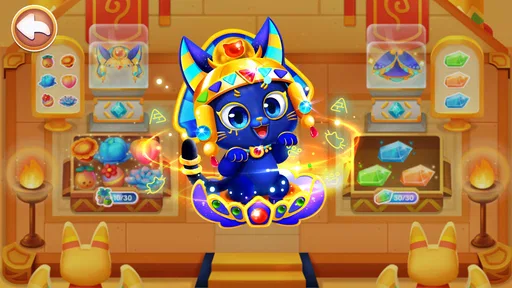
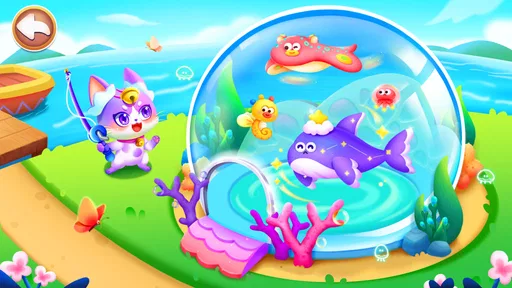

Our Review of Little Panda's Cat Game
 Analysis by Appyee
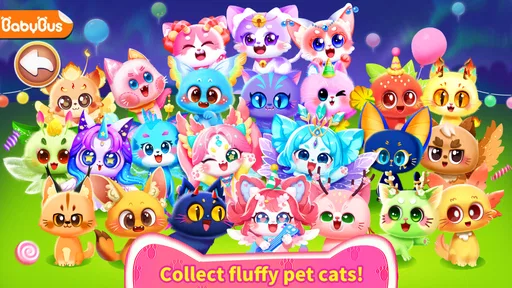
Little Panda's Cat Game is the kind of educational game I would hand to a young child who enjoys caring for animals but still needs a simple, gentle activity. Developed by BabyBus, it places the player in a virtual pet setting where cats can be bred, fed, and dressed. That sounds modest, and it is, but the simplicity is also the point: the game is easy to understand, visually inviting, and built around repeated care routines rather than difficult rules or fast reactions.
After spending time with it, my overall view is positive but specific. This is not a deep pet simulator, a demanding strategy game, or a substitute for a more structured learning app. It works best as a short, supervised play experience for children who like pretend responsibility. The strongest parts are its approachable interaction and the way ordinary tasks become small lessons in sequence, choice, and attention. The main weakness is that children who want constant novelty may eventually find the routine narrow.
What the cat-care loop feels like in everyday play
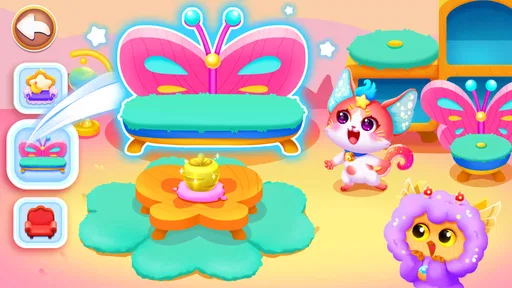
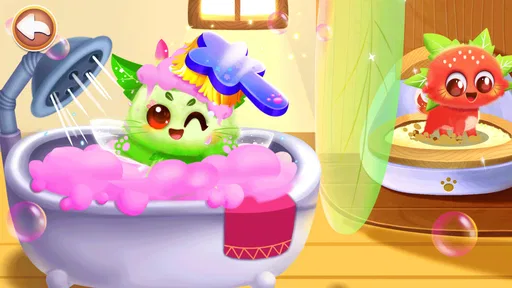
The central appeal comes from turning familiar pet-care actions into play. A child can look after cats, decide what they wear, and take part in the breeding side of the virtual world. These activities are immediately understandable even for a young player. There is no need to explain a complicated objective before starting; the child can begin by interacting with the animals and gradually learn what each part of the game expects.
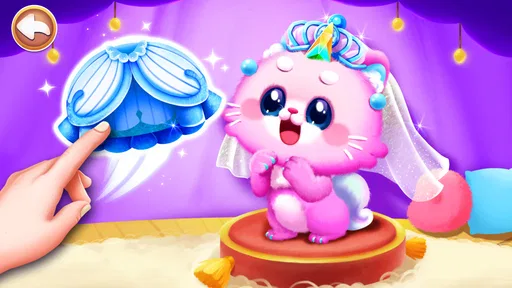
I especially like the way the game gives pretend care a visible structure. Feeding is not presented as an abstract lesson about responsibility, but it still encourages the player to notice a need and respond to it. Dressing the cats adds a creative choice, while breeding introduces a sense of building and expanding the pet world. Together, those activities create a light routine that feels more purposeful than tapping through disconnected mini-games.
That routine also makes the game suitable for short sessions. A child can play for a few minutes while waiting at a restaurant, during a quiet afternoon, or before moving on to another activity. I would not expect every session to feel fresh for a long time, but the game does not need a large time commitment to be enjoyable. Its compact design is useful for parents who want something calmer than an action game.
The educational value is gentle rather than academic. I would describe it as practice in observation, sequencing, and making simple choices. A child may learn to check what a cat needs, complete one action before another, and think about appearance when choosing clothes. Those are small skills, but they are appropriate for an early-childhood game. The experience does not force a lesson in a heavy-handed way, which helps it remain playful.
One practical tip is to let the child explain the care routine aloud. Asking, “What does your cat need next?” turns passive tapping into a little conversation about order and decision-making. This works particularly well because the activities are concrete. Instead of quizzing a child with right-or-wrong questions, a parent can use the cat world as a prompt for storytelling and simple reasoning.
The visual presentation is clearly aimed at children. The overall concept is friendly and non-threatening, and the cat theme gives the game an immediate emotional hook. Children who already enjoy animals will understand the appeal quickly. Even a child who has never cared for a real pet can experiment with the idea in a low-pressure setting.
Why the simple design is one of its real strengths
Many children’s games try to hold attention through constant rewards, busy screens, or a large collection of activities. This one benefits from doing less. The focus on cats gives the experience a recognizable identity, and the basic actions are easy to revisit without a long explanation. For a first virtual-pet game, that accessibility matters more than a large feature list.
I also think the simplicity makes it easier for an adult to understand what the child is doing. If a parent sits beside the player, it is straightforward to join the conversation: choose an outfit, talk about feeding, or ask what kind of cat the child wants to care for. The game can therefore become a shared activity rather than something that disappears into a child’s private screen time.
Another useful approach is to use the dressing activity to encourage creative language. A child can describe why a particular outfit suits a cat, invent a personality for it, or create a story about where the cat is going. The game itself does not need to provide a formal storytelling mode for this to be valuable. The visual choices give children material for imaginative play.
The virtual setting also offers a safe way to discuss real pet ownership. I would make the distinction clear: a game cat does not need the same care, patience, or expense as a real animal. Still, feeding and looking after a digital pet can open a conversation about why living animals need regular attention. That makes the app more useful when an adult treats it as a starting point rather than a replacement for real-world learning.
Its audience is reflected in its Everyone content rating, and the low barrier to entry supports that positioning. The game is free to start, which makes it easy for a family to try without committing money first. It includes in-app purchases ranging from $0.39 to $29.99 per item, so I would still check purchase controls before giving a child unrestricted access. The free entry is convenient, but the presence of optional spending means the adult should remain involved.
Where it fits among children’s game alternatives
Compared with a general puzzle game, this title is more emotionally focused. A puzzle may provide clearer problem-solving practice, while the cat game offers a stronger sense of caring for a character. Compared with a large life-simulation game, it is much easier for a young child to approach, but it also has less depth and fewer systems to manage. The right choice depends on whether the child wants nurturing play or a broader challenge.
It also differs from a purely educational drill app. Drill-based apps are often better when the goal is direct practice in reading, numbers, spelling, or another defined subject. This game is better for informal learning through pretend play. I would choose it for a child who resists worksheets but enjoys animals, and choose a more focused learning app when a parent needs measurable practice in a particular school skill.
Against other virtual-pet experiences, its advantage is the child-friendly entry point and clear cat theme. Its trade-off is that the repeated care cycle may not satisfy older children who want collecting systems, exploration, competition, or more complex customization. That is not a flaw for its intended audience, but it is an important boundary. A game can be well designed for younger players and still feel too limited for a child who has moved beyond that stage.
The limitation parents should notice before installing
The biggest issue is repetition. Feeding, breeding, and dressing provide a pleasant loop, but the concept has a natural ceiling. Once a child has explored the available ways to care for and personalize the cats, the surprise may fade. I would not present this as a game that will hold the attention of every child for months. It is more convincing as a rotating option in a wider collection of age-appropriate activities.
That repetition can be helpful for some children. Predictable routines may feel comfortable, and repeating an action can reinforce the idea that care requires consistency. The same quality can feel dull to a child who needs frequent new challenges. Parents should watch the child’s response rather than assuming that a high store rating automatically means a perfect fit for every personality.
The game may also be a poor match for children who dislike animal themes or prefer construction, racing, drawing, or logic puzzles. Its appeal depends heavily on the pleasure of looking after cats. If that emotional connection is missing, the core activities may not provide enough motivation on their own. In that situation, a different educational game with a clearer problem-solving focus would probably be a better use of screen time.
I would also keep the free-to-play structure in mind. The game costs nothing to begin, but optional purchases can change how a family manages access. For a young child, I recommend setting device-level purchase protection and explaining that not every visible item needs to be bought. This is not a criticism of the cat-care concept itself; it is simply a sensible part of introducing any free children’s game with paid items.
Another trade-off is that the game encourages pretend responsibility without reproducing the full complexity of real care. That makes it accessible, but it can also create an overly tidy picture of pet ownership if an adult does not add context. I would use the game to discuss kindness and routine, then connect those ideas to real examples such as cleaning, patience, and respecting an animal’s needs.
Who will get the most from it
I think the best audience is preschool and early-primary children who enjoy gentle interaction and animal characters. It is especially suitable for a child who likes choosing clothes, repeating familiar routines, and making small decisions without facing failure or time pressure. A parent looking for a calm introduction to virtual pets will probably find the format approachable.
It can also work well for siblings or an adult and child playing together. One person can choose the cat’s outfit while the other invents a name or story. A parent can ask the child to plan the order of care tasks, then let the child take the lead. Those small discussions add value that would be missed if the game were treated only as a way to keep a child occupied.
A realistic everyday use case would be a short transition period after school. A child may need a quiet activity while a parent prepares dinner, but a long, intense game would be unsuitable. A brief visit to the cat world can provide a soft landing: the child checks on the pets, makes a clothing choice, and then moves to dinner or another offline activity. I would use it in that kind of limited window rather than as an all-evening destination.
It may also suit families introducing a child to the idea of caring for an animal before considering a real pet. I would be careful not to treat the game as proof that the child is ready for that responsibility, but it can reveal whether the child enjoys routine care or only the decorative side. Watching how the child responds to feeding compared with dressing can lead to a more honest conversation about what real ownership involves.
The game is less suitable for older children seeking strategy, competition, or a substantial progression system. It is also not my first recommendation for parents whose main goal is literacy or numeracy practice. In those cases, a dedicated educational tool with structured exercises would be more precise. This title earns its place through emotional engagement and imaginative care, not through formal instruction.
Device details and what they mean in practice
The game was released on October 27, 2021, and its current version is 8.75.43.00. It requires Android 6.0 or later, which makes it accessible on many older compatible devices. I would still test it on the specific phone or tablet a child will use, particularly if that device is shared with other family members and storage or performance is already tight.
BabyBus has built a recognizable children’s-game identity around approachable characters, and this title fits that style through its focus on a small, friendly pet world. Its popularity is substantial, with over 10 million installs and a 4.6 average from around 15 thousand ratings. Those figures suggest that the concept has reached a broad audience, although they should be treated as context rather than a guarantee that every child will enjoy the same loop.
The store record also shows 216 written reviews, which is enough to indicate active user discussion without changing my main conclusion: the most important test is whether the child enjoys the specific mix of care and dress-up. A popular children’s game can still be the wrong choice for a child who wants more challenge. I would let the intended player try the free version before considering any purchase.
Because the app is free, the installation decision is relatively easy. The more important decision is how it will be used. I would set a time boundary, keep purchases protected, and encourage the child to talk about what the cats need. Those three steps make the experience more intentional and reduce the chance that the game becomes repetitive, unstructured tapping.
My recommendation after weighing the trade-offs
I recommend Little Panda's Cat Game to families looking for a gentle, animal-themed activity with a clear learning-through-play angle. Its best qualities are its approachable care routine, creative dressing choices, and suitability for short shared sessions. It gives young children a small world they can understand quickly, while offering adults natural openings to discuss responsibility, sequence, and imagination.
I would skip it if the child needs academic practice, dislikes virtual pets, or quickly loses interest in repeated routines. I would also avoid presenting it as a complete lesson about animal care or as an endlessly varied game. Its value is narrower and more honest: it is a friendly pretend-care experience that can support conversation and simple decision-making.
For me, that focused purpose is enough to make it worthwhile. The game does not need complicated mechanics to serve its audience, and its limitations become manageable when sessions are short and guided. If your child lights up at the idea of feeding and dressing cats, the free starting point makes it an easy title to try. Just keep expectations realistic, protect in-app purchases, and use the cat world as a bridge to richer offline play. My verdict: a charming first virtual-pet game, best enjoyed as a short, shared activity rather than a long-term challenge.
Verdict
Strengths of Little Panda's Cat Game
- Simple controls make it easy for young children to play independently.
- Bright animations and friendly characters keep the experience engaging.
- Short activities are suitable for quick play sessions.
- Teaches basic care routines through playful interactions.
- Offline play is useful when traveling or away from Wi-Fi.
Limitations of Little Panda's Cat Game
- Some activities may feel repetitive after extended play.
- Frequent prompts can encourage children to access other content.
- The game may be too simple for older children.
- In-app purchases or ads may require parental supervision.
- Limited customization can reduce replay value over time.
Other Releases by BabyBus
View All
Little Panda Policeman
Educational4.0

Little Panda's Chinese Recipes
Educational4.4

Little Panda's Restaurant
Educational4.4

Little Panda's Ice Cream Games
Educational4.3
Similar Picks in This Category
View AllLittle Panda Policeman
BabyBus4.0

Monster Trucks Game for Kids 2
Raz Games4.1
Little Panda's Chinese Recipes
BabyBus4.4
Little Panda's Restaurant
BabyBus4.4
Little Panda's Ice Cream Games
BabyBus4.3

Baby Panda Care
BabyBus3.8
Frequently Asked Questions
What is Little Panda's Cat Game about?
Little Panda's Cat Game is a child-friendly virtual pet experience centered on caring for an adorable cat. Players can usually feed, clean, play with, and look after the pet while exploring simple activities and colorful scenes. Its design focuses on easy interaction, playful animations, and short tasks, making it suitable for young children who enjoy animal-themed games and pretend-care activities.
Is Little Panda's Cat Game suitable for young children?
The game is designed with simple controls, bright visuals, and straightforward activities that are generally accessible to preschool and early-school-age children. Most interactions are based on tapping, choosing items, and completing basic care tasks rather than complicated gameplay. Parents should still check the recommended age rating, available language options, and the app’s current content before allowing independent play.
Does Little Panda's Cat Game require an internet connection?
Some parts of Little Panda's Cat Game may work without a constant internet connection, particularly the basic pet-care activities after the game has been installed. However, internet access can be required for downloading additional resources, displaying advertisements, restoring purchases, or receiving updates. Availability may vary by device and version, so testing the game in offline mode is recommended before traveling.
Are there advertisements or in-app purchases in Little Panda's Cat Game?
The presence of advertisements and optional purchases can depend on the version, platform, region, and publisher settings. Free children’s games may include promotional content, locked items, or paid features, so parents should review the store listing carefully before downloading. It is also wise to enable parental controls and restrict unauthorized purchases through the device’s account settings.
What should parents know about privacy and permissions?
Before installing Little Panda's Cat Game, parents should review its privacy information and the permissions requested on Android or iOS. A simple pet game should not normally need access to unrelated personal features, although advertising, analytics, notifications, or account services may request additional data. Downloading from the official app store and checking the developer’s privacy policy are recommended steps.
Play our best games!


